Part Two
Part Four

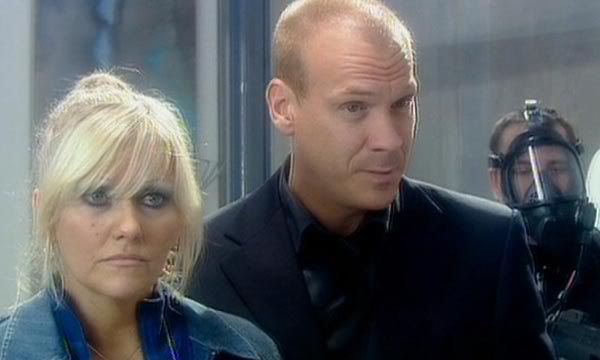
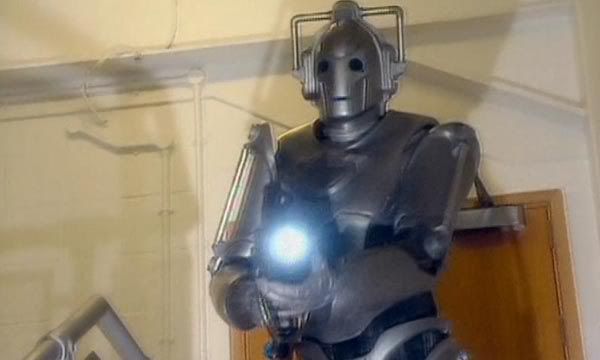
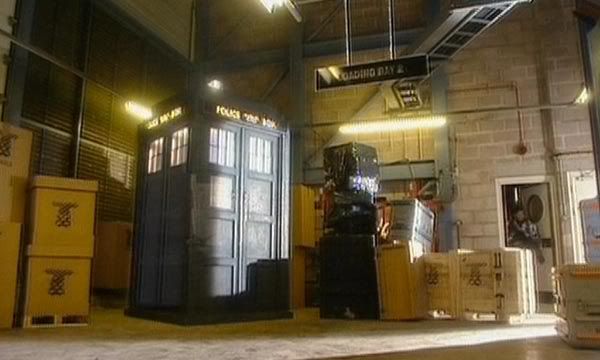
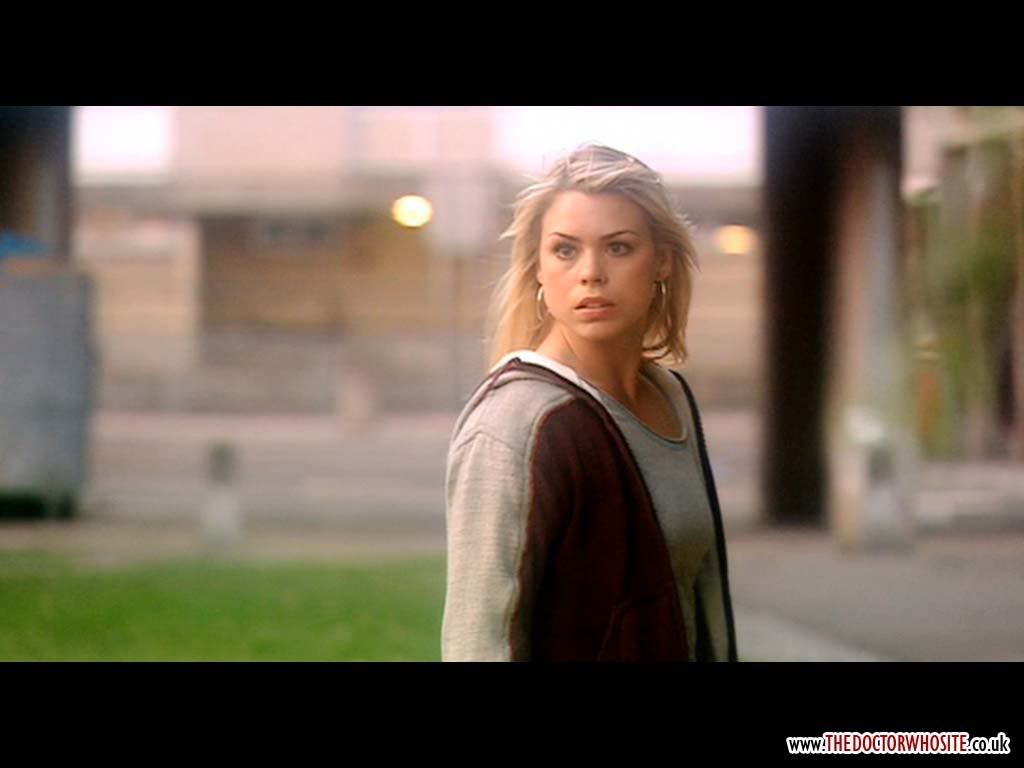
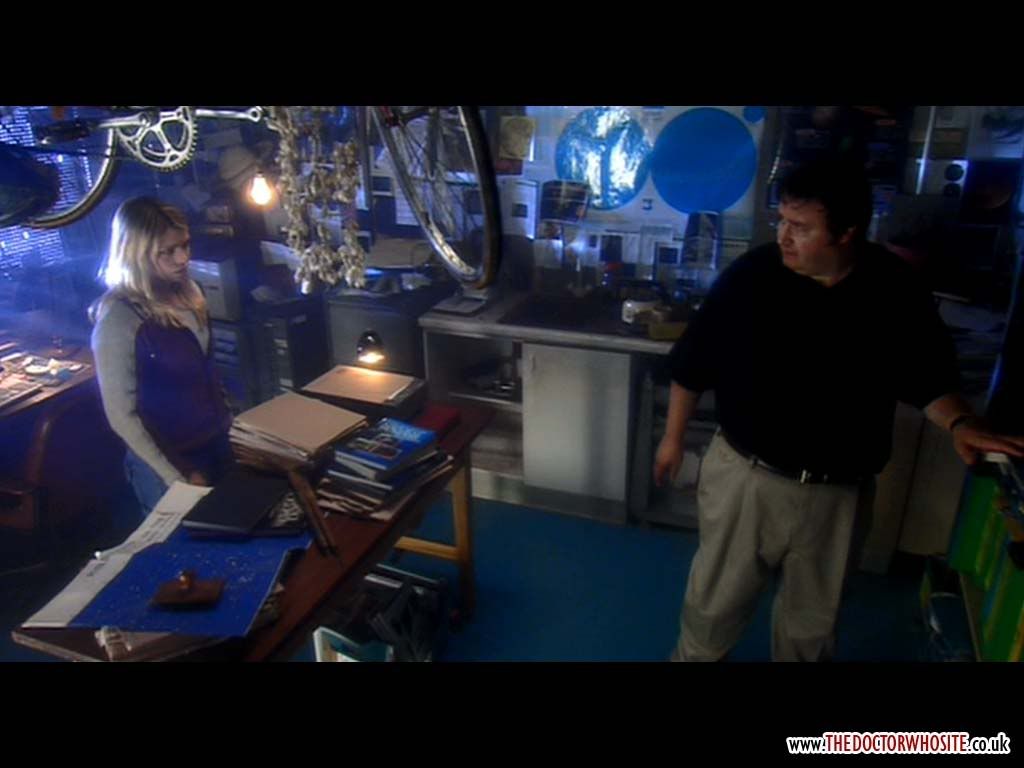
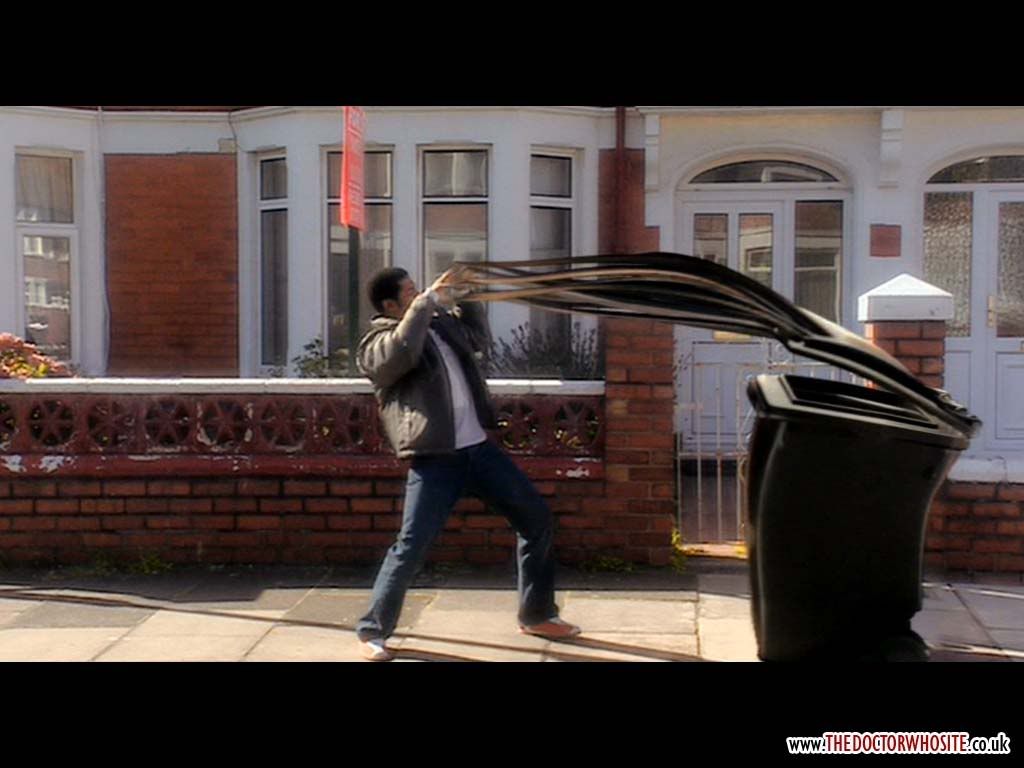
 We had to wait 6 months and at 6pm, BBC ONE on Christmas Day, 11 Million of us sat down and watched Doctor Who - "The Next Doctor". The opening 2 minutes we had all seen thanks to the BBC snippet aired a few weeks ago to tantalize our WHO buds. The opening sequence from when we meet "the other Doctor", I laughed out loud. Where DM's Doctor lassoos a Cyber Shade and is dragged up the side of a building with the Doctor trying to help pull the Shade down woith no luck. Dragged upwards and through a window and then both dragged through an empty warehouse until Rositta cut the rope . From that moment on, both Doctor's become friends. At Christmas tea time that is what you want - a bit of laughter. TND part 1 below
The Ninth Doctor regenerated into the Tenth due to cellular damage caused by absorbing the energies of the time vortex at the climax of "The Parting of the Ways". In the Children in Need mini-episode, the Doctor initially exhibited stable behaviour as he introduced his new form to Rose Tyler, showing particular interest in his appearance; but soon began acting erratically and said that his regeneration had "gone wrong". He remained in a delirious or comatose state through most of the events of "The Christmas Invasion" until his regeneration was settled through absorbing the free radicals and tannin from some hot tea that had dripped onto a power source inside the TARDIS. He then saved the Earth from invasion by defeating the leader of the alien Sycorax using a satsuma.
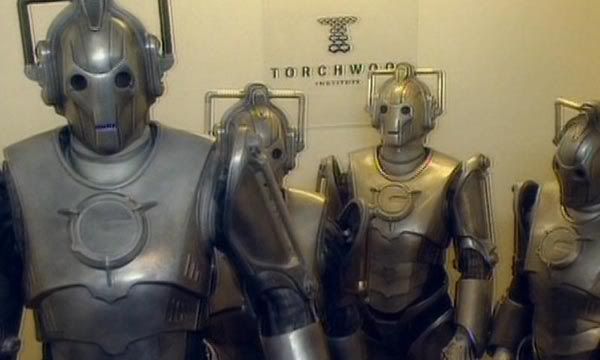
The Tenth Doctor and Rose went on to rescue Queen Victoria from a werewolf. The Doctor was knighted as "Sir Doctor of TARDIS" as a reward — a title he later used during his first journey with Martha Jones — although Victoria banished them from the British Empire and set up the Torchwood Institute to defend Britain from paranormal threats and wait for the Doctor's return. He would finally encounter the Institute in "Army of Ghosts".
In "The Girl in the Fireplace", he appeared to develop romantic feelings for Madame de Pompadour while attempting to discover why clockwork androids on a 51st Century spaceship were stalking her throughout her life. Ultimately, he was unable to take her with him as the last, asynchronous time window returned him to her after her death.
In "Rise of the Cybermen", the Doctor was forced to fix the broken TARDIS by giving up the energy from ten years of his life (but he claims that it is worth every second). Given the general longevity of the Time Lords, whether this will affect him to any significant degree is yet to be seen, although it could also be interpreted as affecting his biological age (the Sixth Doctor said in Attack of the Cybermen that a few decades were "a handful of heartbeats for a Time Lord").
In "Blink" the Doctor and Martha were temporarily trapped in 1969. It's not shown how long they were there but Martha had to work in a shop to support him, indicating they were there for at least many days.
In "The Doctor's Daughter," the TARDIS took the Doctor, Martha, and Donna Noble to the planet Messaline in an unspecified time period. Armed human colonists forcefully extrapolated the Doctor's DNA and created a young female soldier for their army. She later chose the name "Jenny," as suggested by Donna, alluding to her status as a "generated anomaly". Despite being reminded of the loss of his family and his former status as a parent, the Doctor eventually accepted her as his 'daughter', only to be separated from her by the end of the episode after he believed her to have died, not knowing that she later returned to life.
The Tenth Doctor has used his psychic abilities more often on screen than his previous incarnations. He continues to use the Ninth Doctor's psychic paper, but has also been seen using telepathic techniques several times (for instance, in "The Girl in the Fireplace" and "The Shakespeare Code"). In "Last of the Time Lords", he uses his telepathic skills over a year to tap into the Archangel satellite network to rejuvenate himself with humanity's belief in him. He is then able to manipulate the combined energy apparently created by that belief, using it alternately as a shield and as a weapon, in the form of telekinesis.
In "Voyage of the Damned" the Tenth Doctor states that he is 903 years old. This contradicts previous statements about the Doctor's age, as the Seventh Doctor states his age as 953 in the episode Time and the Rani, though this follows the idea, started by the Second Doctor in The Tomb of the Cybermen, that the Doctor is not very good at keeping track of how old he is.
The Tenth Doctor "inherited" Rose Tyler as his companion, who left in "Doomsday", the final episode of the 2006 series. At the end of the same episode, a bride named Donna Noble, played by Catherine Tate, appeared in the TARDIS as a result of her Huon particle intake, and appeared in the 2006 Christmas special, "The Runaway Bride". In the episode's dénouement, she refused his offer of full-time companionship, instead suggesting he find someone else. She did, however, return as the full time companion for Series 4. Rose is also set to return for the three finale episodes in Series 4, and has already made three foreshadowing appearances, none of which the Doctor witnessed.
Rose's boyfriend, Mickey Smith (Noel Clarke), a recurring character from the previous season, joined the TARDIS crew as a regular companion in "School Reunion". Mickey departed the TARDIS in "The Age of Steel", replacing his deceased counterpart on a parallel Earth. He returned and departed for good in the 2006 two-part series finale, "Army of Ghosts" and "Doomsday".
Rose's mother, Jackie Tyler, was also a recurring character in the first two series, and played a major role in several episodes, notably "The Parting of the Ways", "The Christmas Invasion" and "Love & Monsters", finally travelling in the TARDIS by accident in "Army of Ghosts". Though she travelled in the TARDIS with the Doctor she is not necessarily considered a companion.
In series three the Doctor was joined by a new companion called Martha Jones, played by Freema Agyeman.Agyeman previously played Adeola in "Army of Ghosts", a character who died during the course of the episode, later revealed to be Martha's cousin. Martha joins the Doctor after they save each other's lives during a Plasmavore attack, and the Doctor offers her a single trip in the TARDIS by way of thanks. She continues as his companion following a trip to the Globe Theatre, and was made an "official" companion — by receiving a key to the TARDIS — in "42". Martha returns to Earth to finish her medical training in "Last of the Time Lords", but leaves her superphone with the Doctor so she can call him if she wants to come back, which she is set to do in 5 episodes of the fourth series, teaming up with the Doctor and Donna as they battle Sontarans and returning later for the finale. An "in-between" guest stint in the Doctor Who spin-off series Torchwood revealed that Martha had qualified as a doctor and now works for the Doctor's one-time employers, UNIT.
Previous companion "Captain" Jack Harkness was originally to have rejoined the TARDIS crew in the 2006 series. However, this plan was abandoned, in part because of Harkness' role in Torchwood. It was initially announced that there would be no crossovers between the two series, but Harkness returned to Doctor Who in "Utopia" for the final three episodes of the 2007 series. In "Last of the Time Lords", the Doctor re-offers Jack full-time companionship but the events of the episode cause Jack to realise that his friends in Cardiff need him, declining the offer he had pined for.
The Doctor was also reunited with previous companions Sarah Jane Smith and K-9 (Mark III) in "School Reunion".
Although she is not considered an official companion, the character of Sally Sparrow in the 2007 episode "Blink" fulfils many of the functions of a companion in this episode, in which she is "recruited" by the Doctor to rescue him from 1969; the episode focuses on her as she follows clues left for her by the Doctor and several allies throughout time, before she actually meets the Doctor at the story's conclusion. The episode "The Girl in the Fireplace" has the Doctor offering Madame de Pompadour the chance to become a companion (if briefly), but circumstances render this impossible and she dies before being able to take him up on the offer. After Martha's departure, pop star Kylie Minogue appeared in the 2007 Christmas special, "Voyage of the Damned", playing a character named Astrid Peth, 'a one-off companion' for the episode. Both she, and later, Jenny, the Doctor's 'daughter' by cloning, accepted offers of companionship from him only for circumstances to prevent this too.
In the 2008 series episodes "Silence in the Library"/"Forest of the Dead", the Doctor encounters Professor River Song, a 51st Century archaeologist he will apparently meet in the future and become very dear to him, presumably while he is still in his tenth incarnation. Whether viewers will ultimately learn what relationship the Doctor has with Song is yet to be seen. It was never explicitly stated that she was a companion, but she states that they traveled together often and she gained his complete trust, to the point that she would eventually know the Doctor's true name, something even the Doctor's longest-travelling companion -- the audience -- has never known.
The Tenth Doctor is the first since the Second Doctor to actually say "goodbye" to a companion (specifically, Sarah Jane) rather than simply leaving, or giving some platitude when a companion leaves of their own accord. He has made many mentions of Rose Tyler since her departure to Martha Jones and Donna Noble (and has had references of her made to him), although in past incarnations, he has also made the occasional repeated reference to the likes of his granddaughter Susan and Brigadier Lethbridge-Stewart. At one point he used "Doctor James McCrimmon" as an alias, another reference to a previous companion.

The Tenth Doctor generally displays a light-hearted, talkative, easy-going, witty and somewhat cheeky manner, but combines this with a somewhat egocentric sense of unstoppability when facing his enemies. He is perhaps as ruthless and dangerous as his seventh incarnation ever was, although much less inclined to, or capable of, complex schemes and set goals. This emerged early on when he sent the Sycorax leader (who was attacking him from behind) falling to his death while commenting that, with him, there were "no second chances." In "School Reunion", he acknowledges that he is less merciful than he used to be and has stuck to his "one warning" code, punishing his enemies if they persist in their hostilities. This was most explicitly demonstrated in "The Runaway Bride" when he drowned the Empress of Racnoss' children, and in "The Family of Blood" where he gave each Family member an individual and eternal punishment. In "Forest of the Dead", the Doctor supports his immense self-belief in his abilities and authority in a different way by causing the Vashta Nerada to acquiesce to his ultimatum simply by ordering them to research his personal history. However, in "Partners in Crime", after giving his adversary, Miss Foster, an explicit warning, he tried to save her life at the end of the episode and did not punish her Adipose foster children "because they're children." Donna notes that Martha had been a positive influence on him, citing his infanticide of the Racnoss in their previous encounter. Like his past selves, he is critical of weapons, going as far as to describe people with guns as "the enemy" in The Sontaran Stratagem. His strong personal sense of justice makes him quick to anger when he feels it is violated, as in "New Earth" when he learned of the plague farm run by the Sisters of Plenitude, and after Prime Minister Harriet Jones had given the order to destroy the retreating Sycorax ship, the Doctor warned her that he could "bring down" her government with six words ("Don't you think she looks tired?", whispered to Jones' aide, Alex).
Like the Seventh and Ninth Doctor, the Tenth sometimes uses a cheerful, energetic façade to mask inner emotions. He has a tendency to babble, mixing apparent nonsense with vital information, sometimes acting erratically to put his enemies off guard like some of his earlier incarnations. He can also be rude on occasion, and is not always aware of it, being prone to making comments that to outsiders seem obtuse or rude, sometimes to his own embarrassment. In "The Christmas Invasion" and "Tooth and Claw", he is surprised at his own unintentional rudeness when making disparaging remarks, and Jack Harkness, after reuniting with the Doctor, notes that his "new regeneration (is) kinda cheeky." He has a tendency to use technobabble to describe scientific concepts before substituting it with a simpler, analogous explanation. Further to this, he tends to infantilise names and concepts - his description of non-linear temporal physics as "a big ball of wibbly wobbly, timey wimey stuff" is perhaps the most well known example. He is also able to rapidly switch between moods, from mania to anger to nonchalance and uses this as a form of reverse psychology on several occasions ("Fear Her", "Love & Monsters" and "Army of Ghosts"). In the latter, by switching gears suddenly after failing to dissuade Yvonne Hartman from her current activities, he is able to make her uncertain enough to get his way. Unlike the Ninth Doctor, who showed off his vengeful, rage-filled dark side when up against the Daleks, the Tenth Doctor displayed a more confident, self-assured side when around them, but did not hesitate to taunt them.
It has been made clear that the Doctor is, despite constant interaction with others, a lonely person deep down. In "School Reunion", he describes the ability of Time Lords to live so long as a curse, because while his human companions all someday leave him and eventually die, he continues to live. Other characters have also commented on the Tenth Doctor's loneliness. During a conversation with his nemesis, the Master, he admits that since the end of the Time War and the loss of the other Time Lords, he has been "lonely ever since", viewing the Master's return as the end of this loneliness. Indeed, when the Master subsequently dies, the Doctor openly weeps over his body. While the Ninth Doctor was somewhat standoffish in certain situations, particularly "domestics", the Tenth is more extroverted and gregarious, having quickly established a firmer rapport with Rose Tyler's friends and family than he ever did in his previous incarnation, though his talkativeness sometimes irritates others not used to him. The Tenth Doctor is openly fond of mankind and is apparently in awe of their tenacity and curiosity, a trait previously exhibited by his fourth incarnation. In "The Impossible Planet", he hugs the leader of an Earth expedition for daring to explore a planet orbiting a black hole. In "The Age of Steel", he describes human beings as both brilliant and stupid in the same sentence while arguing the necessity of emotions with the Cyber-Controller. The Doctor even goes so far as to exclaim he's willing to battle the Master across the cosmos as long as he leaves Earth alone in "The Sound of Drums." However, he is also quick to criticise mankind when he feels it is necessary.
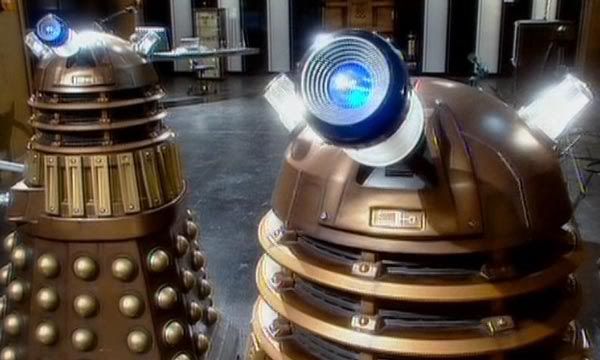
The Tenth Doctor and Rose often faced their adventures with a cheerful, almost blasé attitude, even when terror and death happened around them, contrasting his previous selves, who displayed more serious attitudes when in trouble. Queen Victoria commented on this in "Tooth and Claw" when she banished them (as did Agatha Christie to the Doctor alone in "The Unicorn and the Wasp"), and producer Russell T. Davies hinted that there would be consequences to this carefree attitude later in the 2006 series. In "Doomsday", the two were separated seemingly forever when Rose was left in a parallel universe as a consequence of foiling a Dalek and Cyberman invasion of Earth.
The 2006 series continued the exploration of the Doctor's romantic aspects, with the Tenth Doctor sharing kisses with Rose (albeit while she was possessed by Lady Cassandra) and Madame de Pompadour. In "School Reunion", Sarah all but confesses that she had been in love with him. In "Doomsday", during their farewell, Rose tells the Doctor she loves him; he begins to reply but only manages to say her name before the transmission is cut off, leaving him alone in the TARDIS with tears on his cheeks. After this, whenever he is reminded of Rose he sometimes becomes depressed or pensive. In the audio commentary for "Doomsday" the executive producer Julie Gardner claimed that she will confirm to the nation the Doctor was going to 'say it back'. In 2007 episodes, the Doctor learnt that Martha harboured unrequited feelings for him before she left his company - which he inadvertantly inspired by kissing her as a distraction - and also exchanged kisses with Astrid in honour of "an old tradition" from her home planet. Following the complications with Martha (for which he blames himself), the Doctor seems reluctant to embark on any other potentially romantic companionship, and makes sure that before allowing her to join him, Donna understands that all he wants is a friend.
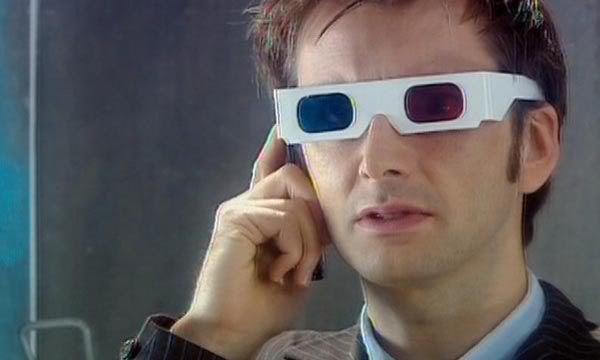
The Tenth Doctor sometimes dons a pair of spectacles, like the Fifth Doctor, whose youthful appearance he shares. In the 2007 Children In Need special, Time Crash, the Tenth Doctor notes other inherited/inspired tendencies when meeting the Fifth Doctor aside from "the brainy specs" (which he observes were worn by the Fifth simply to look clever rather than out of necessity, therefore implying that his are used for the same reason) such as wearing plimsolls/trainers and both of their voices becoming high-pitched when shouting. He also exhibits a remarkable sense of taste, again similar to the Fifth Doctor, ("Planet of Fire"), able to identify the blood type of a blood sample ("The Christmas Invasion") or the presence of mistletoe oil ("Tooth and Claw") just by licking. He also shares the Fifth Doctor's skill with a cricket ball, as demonstrated in "Human Nature". The Tenth also admitted to the Fifth that he was his favourite past incarnation.
The Tenth Doctor speaks with an Estuary English accent, rather than the Northern inflection that the Ninth Doctor used.
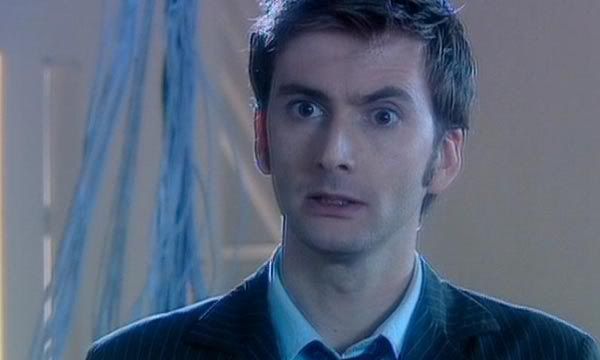
The Doctor seemed disappointed that his tenth incarnation was not "ginger", but has worn his own dark brown hair in various ways throughout the series: unstyled in "The Christmas Invasion"; a fifties-style quiff in "The Idiot's Lantern" and flattened forwards in "The Runaway Bride". He wears a dark brown (with blue pinstripes) or a blue (with red pinstripes) suit, a shirt and a tie (otherwise, open-shirted with a light grey t-shirt/vest ("Tooth and Claw", "Planet of the Ood"|), a red-hued t-shirt ( "42") or a black t-shirt ("Midnight")), a light brown overcoat (which he claims was given to him by Janis Joplin), and a pair of trainers, in colours ranging from cream (brown suit), black (tuxedo) or red (blue suit), a costume which Tennant described as "geek chic". The blue suit debuted in Series 3 episode 1, "Smith and Jones", and both suits were worn from his adventures with Martha Jones onwards. According to an interview on Parkinson, David Tennant and Russell T Davies got the idea for the Tenth Doctor's costume from an outfit Jamie Oliver had worn on Parkinson just after David had taken the role. Another part of the Doctor's costume is a pair of dark tortoise-shell rectangular frame glasses; since The Christmas Invasion he has required them in numerous episodes. As noted above, the Tenth Doctor credited the Fifth Doctor with inspiring his trainers and glasses.

As a character, the Ninth Doctor is less of a central heroic figure than an enabler, encouraging his companions and other people he meets to act upon their more positive impulses. Those he meets (in particular Captain Jack Harkness) often credit him with making them better people (this is indirectly referenced in the penultimate episode of Series 3 when the Master calls the Doctor "the man who makes people better"). He uses this quality alongside his intelligence and the information he gathers to inspire and allow others to act to end the dangers they face, rarely taking direct action himself (although he tended to find himself incapacitated in some manner at crucial moments, therefore requiring the interventions of others).
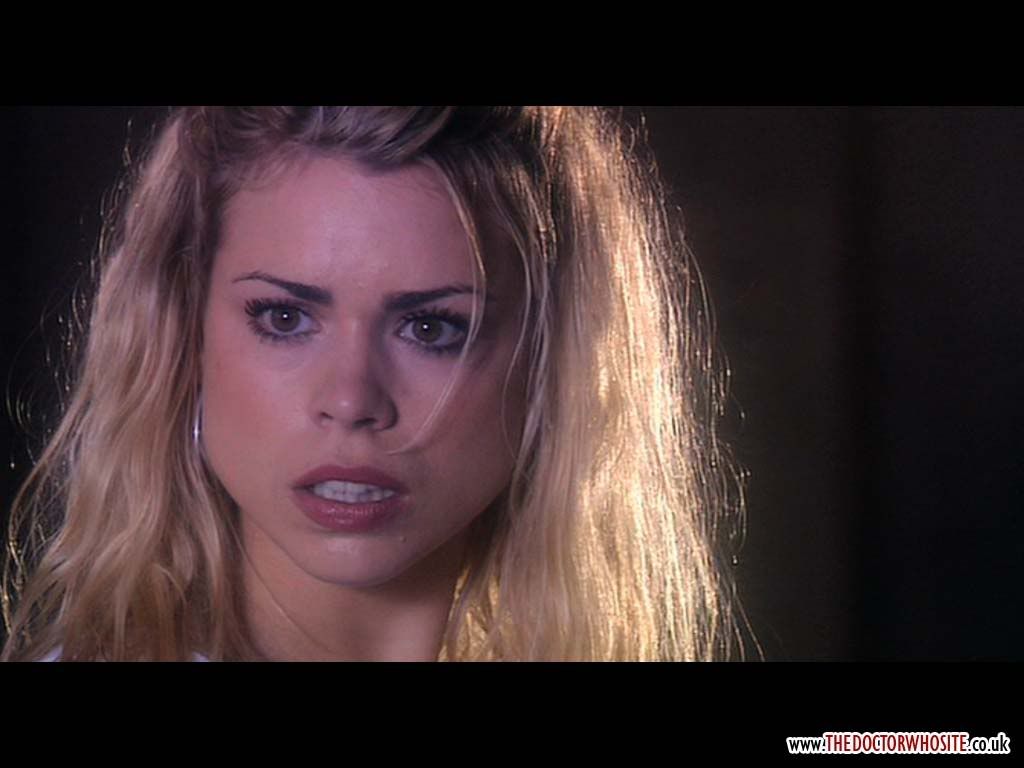
The Doctor's ninth incarnation was perhaps the most gritty, working class and informal, masking a lonely, guilt-ridden and melancholic personality with a jovial, witty, forthright and almost manic exterior. Similar to the Fourth Doctor, he would often make jokes in the face of danger, but then become grim and serious when on his own. Like the Sixth Doctor, he also tended to be fatalistic at times, to the point of near-panic when he and Rose were cornered in "The Unquiet Dead" and he realised that he was going to die (this despite the knowledge that he would probably just regenerate). Despite being impatient with humans, whom he often referred to as "stupid apes" -- and Mickey receiving particular scorn and being dubbed "Mickey the Idiot" -- the Ninth Doctor was far more tactile with, and reliant upon, his human companions than previous incarnations. He was notably both sentimental and emotional, especially where his closest friend, Rose, was concerned, to the point of allowing her to view her parents' wedding and later, her father's last moments — this being just one example of his occasional lack of caution.
The Ninth Doctor was quite colloquial in his language and spoke with a distinctly Northern accent. Although the Seventh and Eighth Doctor spoke with non-Received Pronunciation accents, the Ninth's era was the first time this was commented on in the series. When Rose questioned him on why, if he was alien, he sounded like he was from the North, the Doctor retorted, "Lots of planets have a North!"
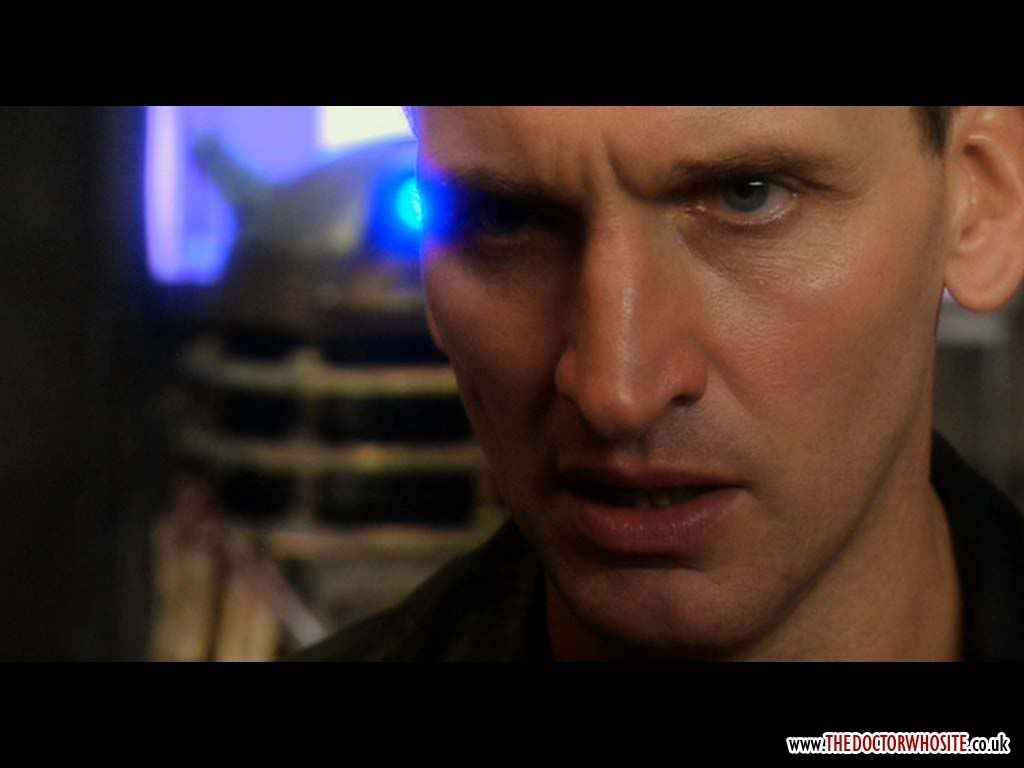
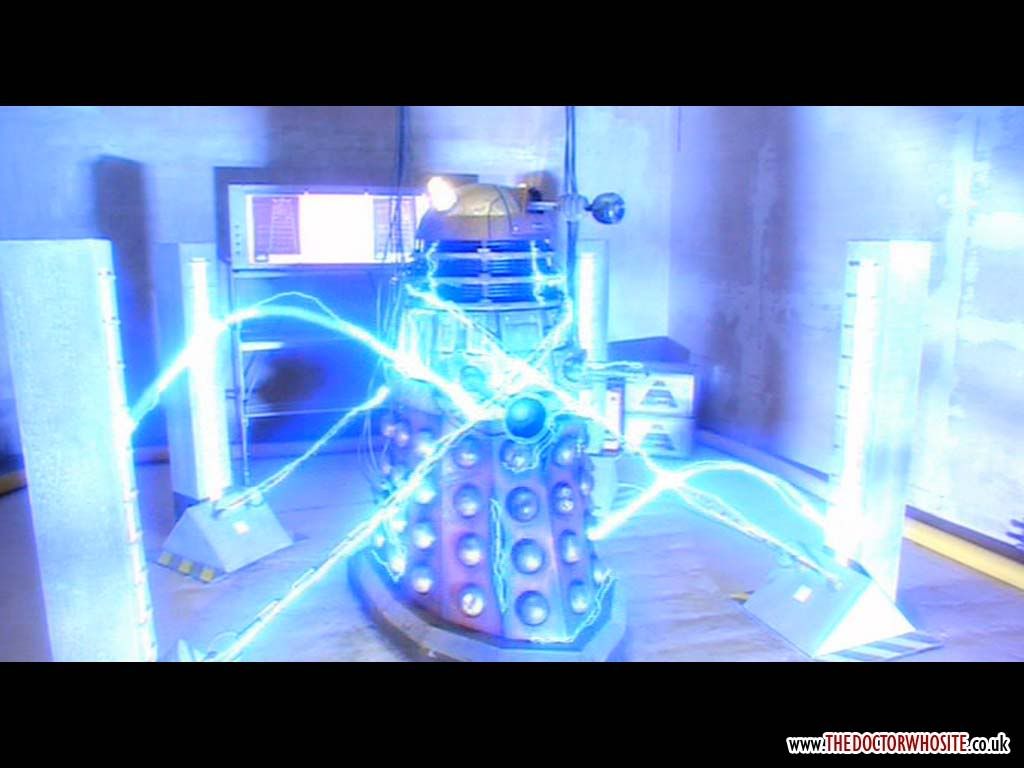
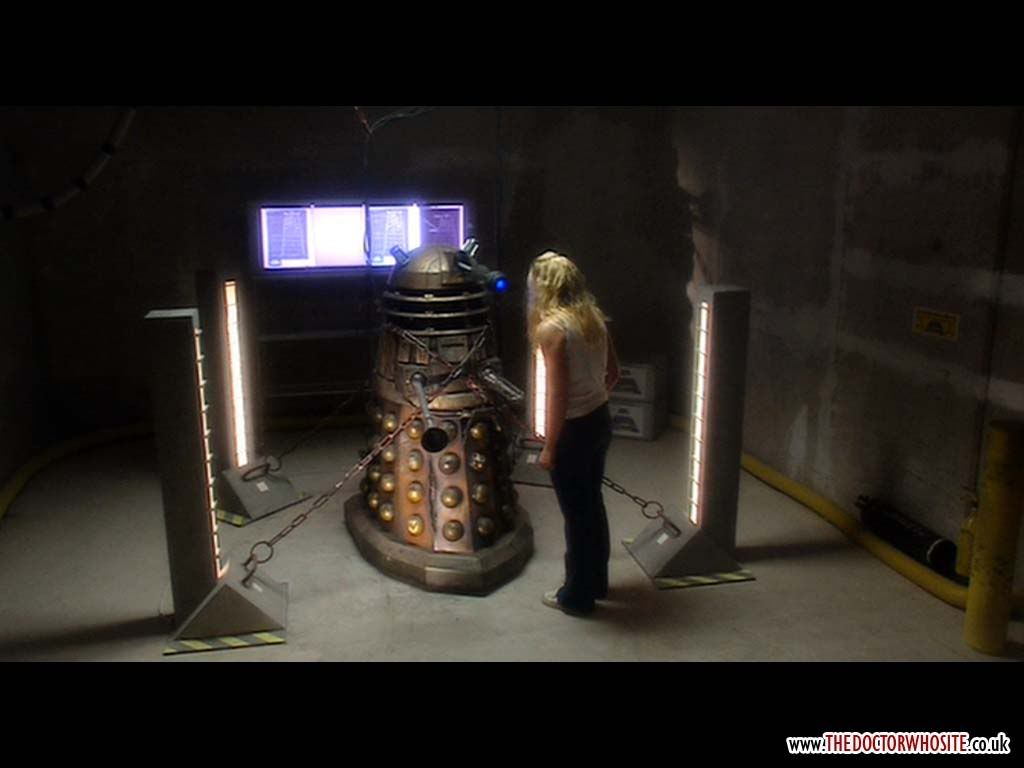
Much of the Ninth Doctor's melancholy, lack of patience, levels of inaction and hard-bitten edge could be attributed to feelings of guilt at being the sole survivor of the Last Great Time War between the Time Lords and the Daleks, the conclusion of which apparently resulted from his own actions to end the Dalek threat, burning away 10 million of their ships and destroying Gallifrey and his own race in the process. This darker side came to the fore when he encountered the lone Dalek in "Dalek", exhibiting an angry, merciless and vengeful streak which surprised even Rose and led to the Dalek commenting that the Doctor would make a good Dalek. Previously, echoing the ruthlessness of his seventh self, he also impassively stood by as the villainous Lady Cassandra exploded, viewing it a fitting end for her actions (it was left ambiguous as to whether he could have spared her). However, a more light-hearted enthusiasm would surface on occasion, sometimes finding manic delight in tense situations such as his meeting with Charles Dickens (of whom he is a well-versed fan) whilst pursuing a kidnapped Rose. He also displayed a wide pop-cultural knowledge ranging from Dickens to 21st century celebrity gossip, while his joy on saving the victims of the nanogene attack in 1940s London, thus totally avoiding fatalities, restored some of his optimism and self-belief. Ultimately, the Doctor was able to put some of his demons to rest and seemed to find some peace through redemption towards the end of his incarnation. This redemption occurred shortly before his regeneration when he was given the opportunity to vanquish the Dalek fleet once more, this time at the cost of the human race, and decided not to do it. When the Dalek Emperor asks if he would rather be a coward or killer, the Doctor merely responds, "Coward. Any day."
In contrast with his successor and in common with his third, fourth and sixth selves, the Ninth Doctor did not shy away from using force in situations he would deem necessary. In "Dalek", he located an alien weapon for use on the last Dalek in existence; were it not for Rose's intervention, he would have used it. In "Bad Wolf", he and his companions escaped from the custody of the Gamestation's armed guards using physical force, with the Doctor throwing a guard against a wall. Later, as he proceeded to the station's control room, he wielded a heavy two-handed weapon, even deactivating the safety as if he was going to use it. However, as he speaks to the controller, he reveals that he had no actual intention of shooting anybody. The Doctor also arranged for lethal weaponry to be used on the Slitheen in "World War Three", sending a missile to destroy the alien family before they could nuke the world.
On several occasions, the Doctor indicates that he is 900 years old, the same age as the Sixth Doctor claimed to be in Revelation of the Daleks. This appears to contradict the original series in which the Seventh Doctor, following his regeneration in Time and the Rani, claimed to be 953 years of age, and who was in turn followed by the Eighth Doctor. To date this discrepancy has yet to be addressed on-screen. (See The Doctor's age.)
The Ninth Doctor's catchphrase, used in a variety of manners, and sometimes ironically, was "Fantastic!"
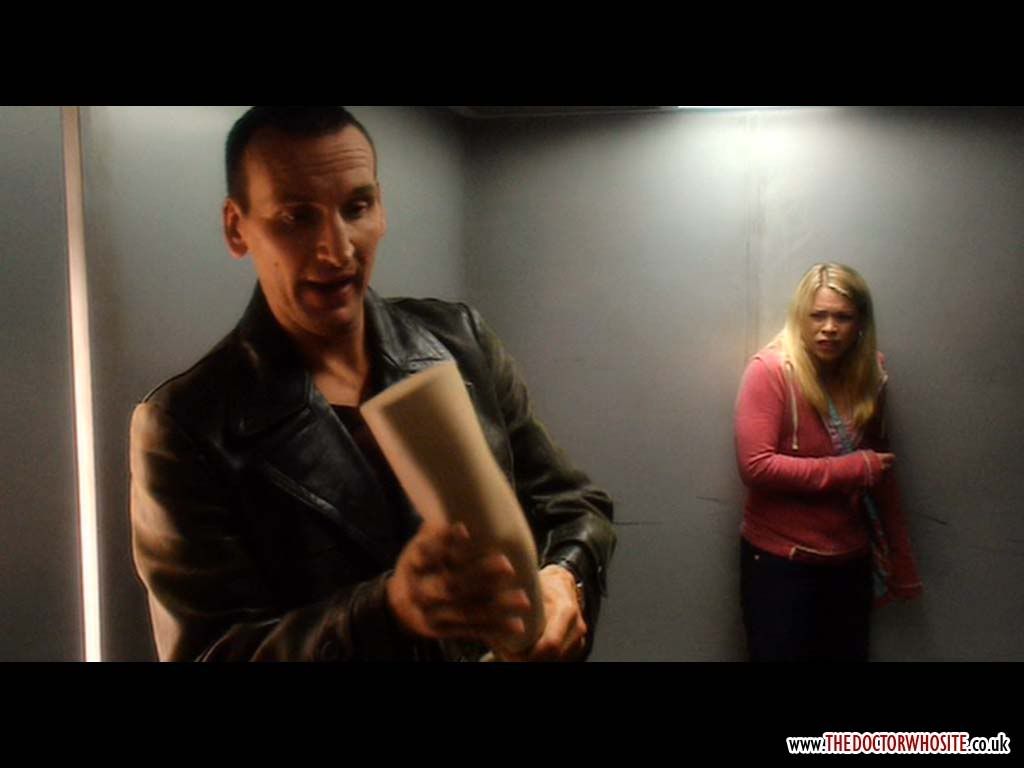
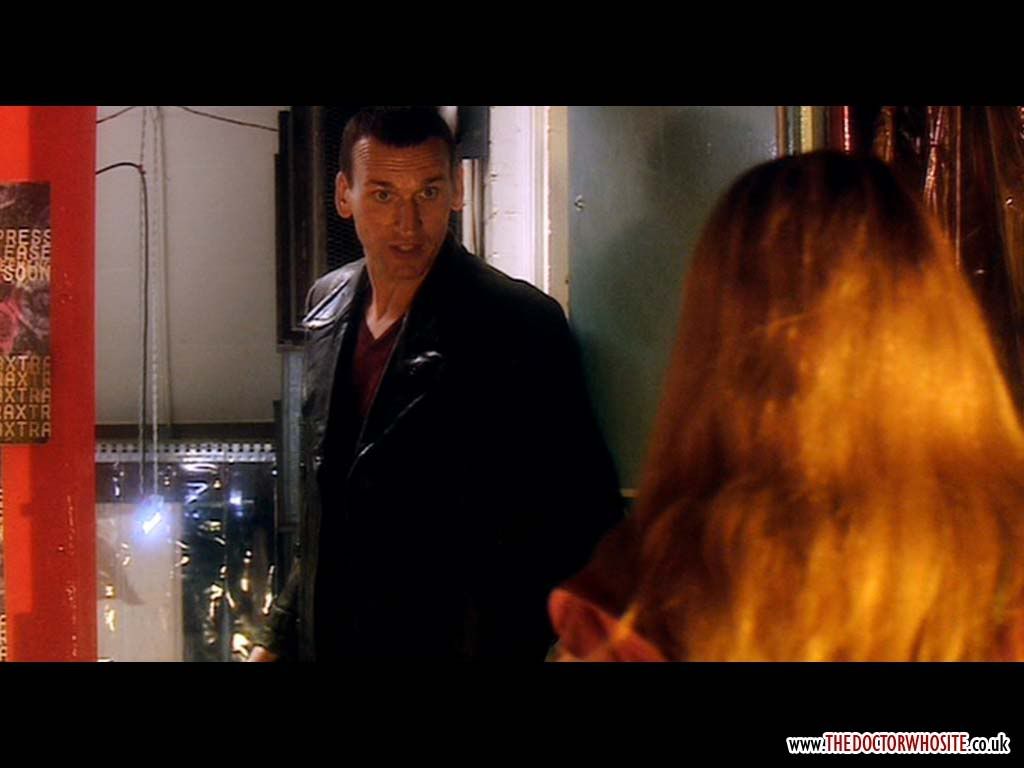
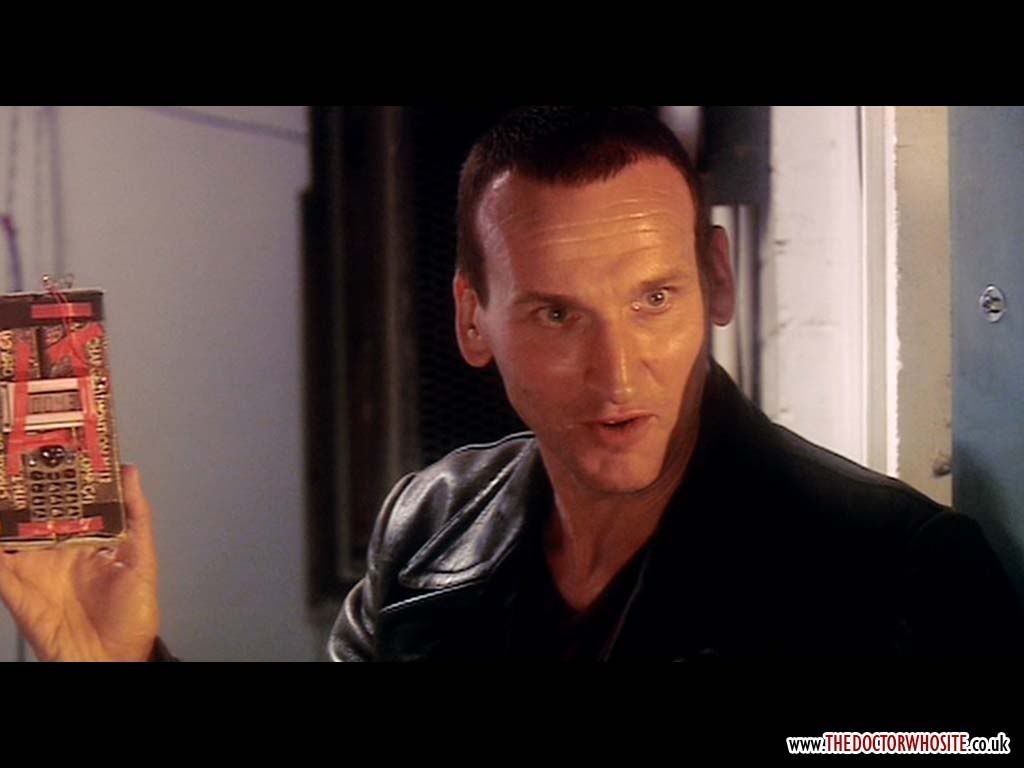
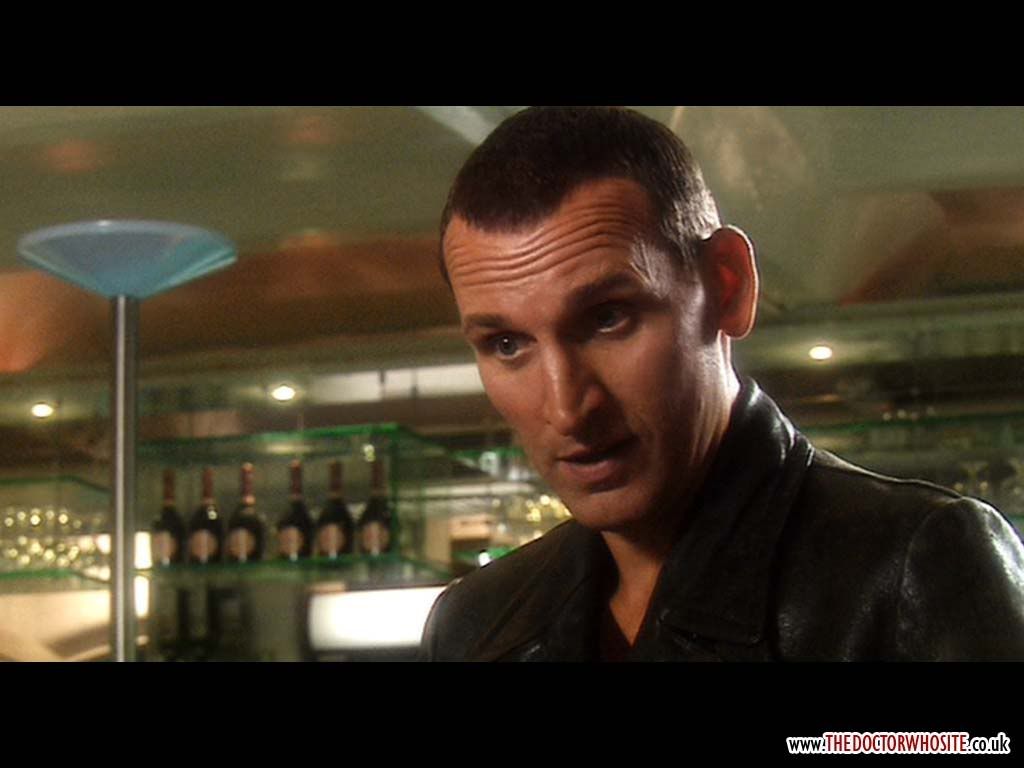
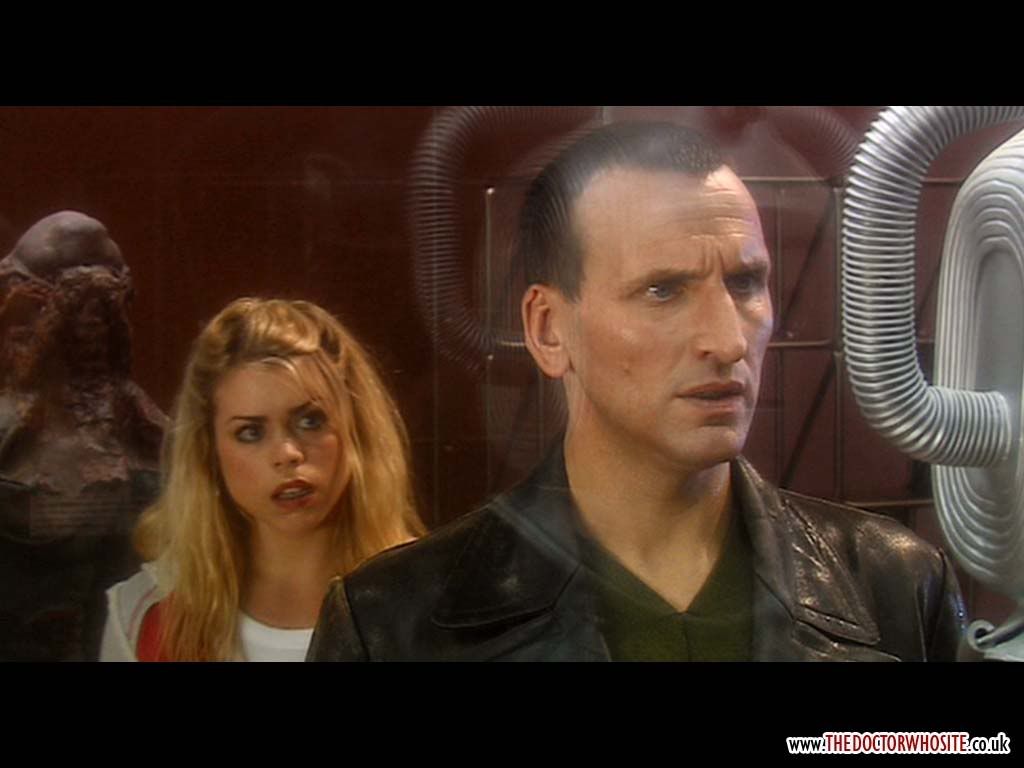
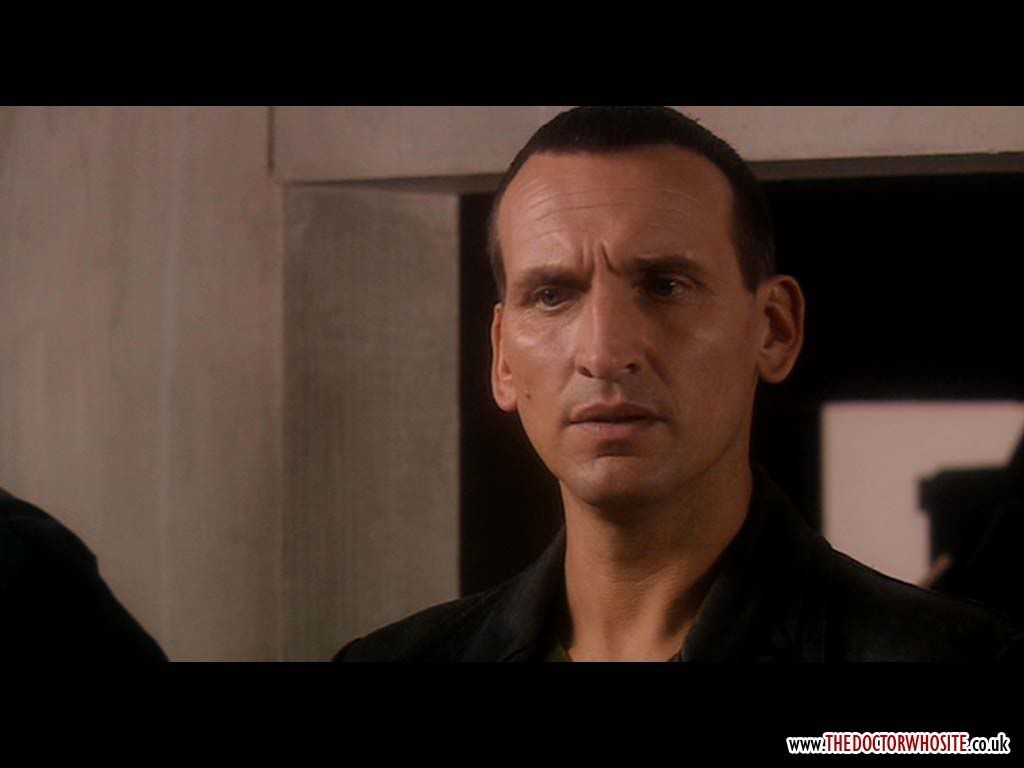
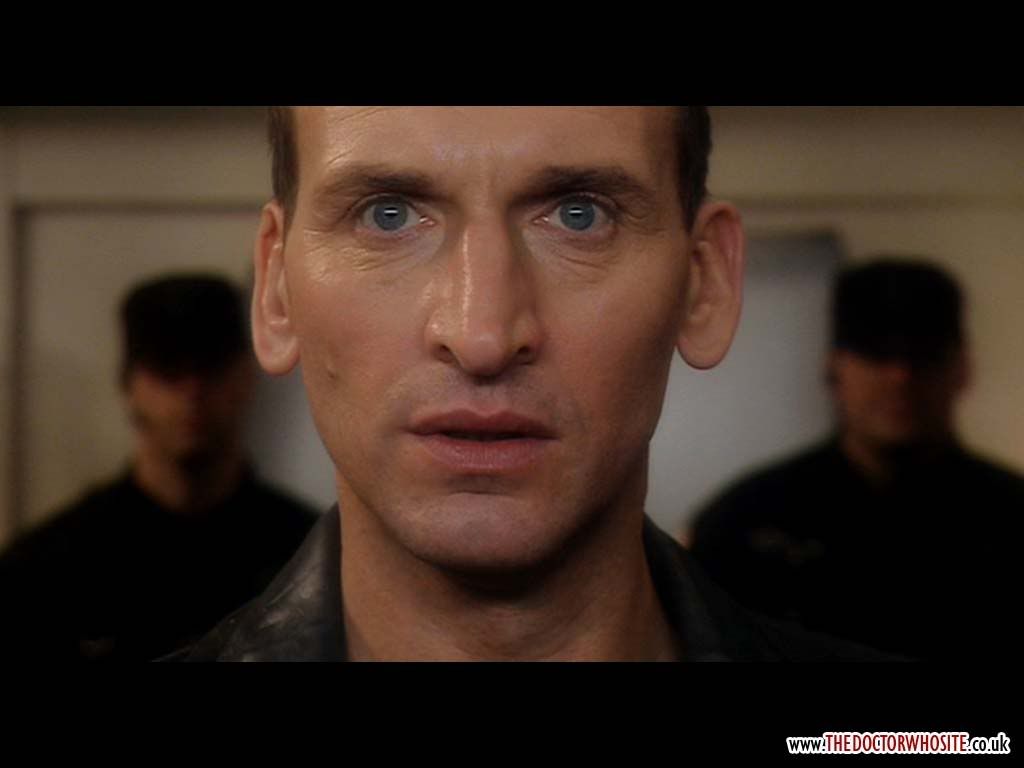
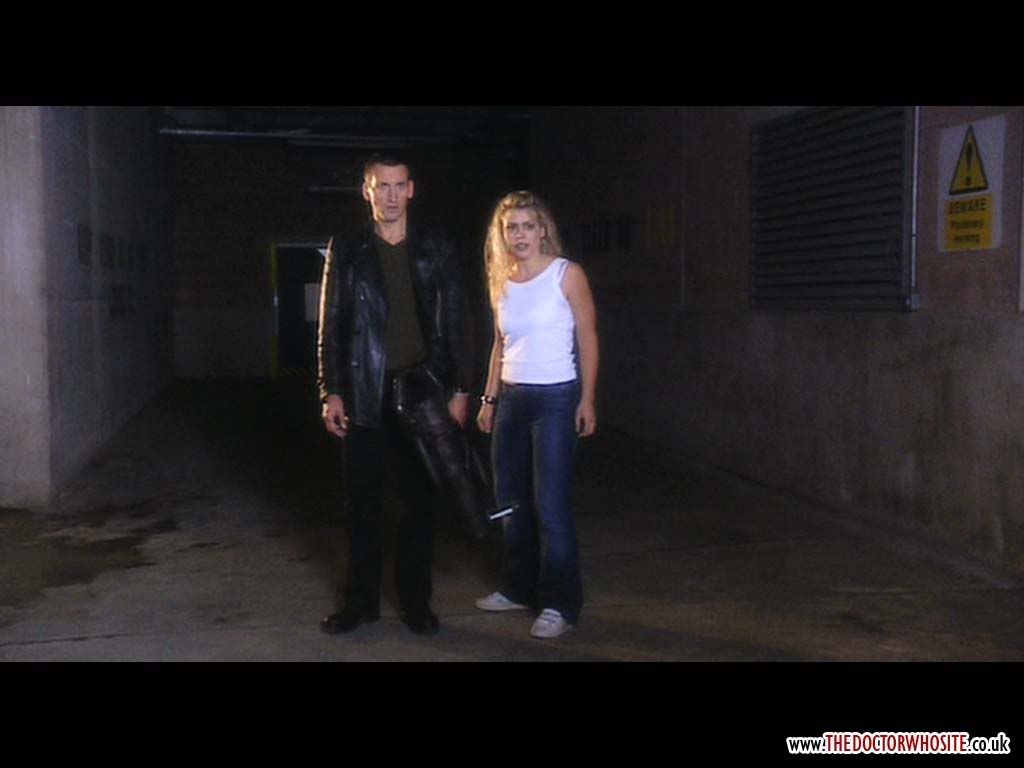
As befitting his more rugged, moodier behaviour, the Ninth Doctor was more streetwise in his appearance than his former selves. In deliberate contrast to the more notable and occasionally eccentric costumes of previous Doctors, the Ninth Doctor dressed in a non-descript, informal fashion: a worn, plain black leather jacket with a dark jumper (the only item he regularly changed, although only the colour, not the cut), trousers and boots. Charles Dickens, on learning the Doctor's name, declared that he more closely resembled a "navvy". Similarly, Jack Harkness, upon first meeting the Doctor and Rose, commented that they were definitely not dressed to blend into 1941 London, describing the Doctor's look as "U-boat captain." (The jacket was based on German Submariners jacket like the one used in Das Boot) Also, unlike other Doctors, he wore his hair close cropped.
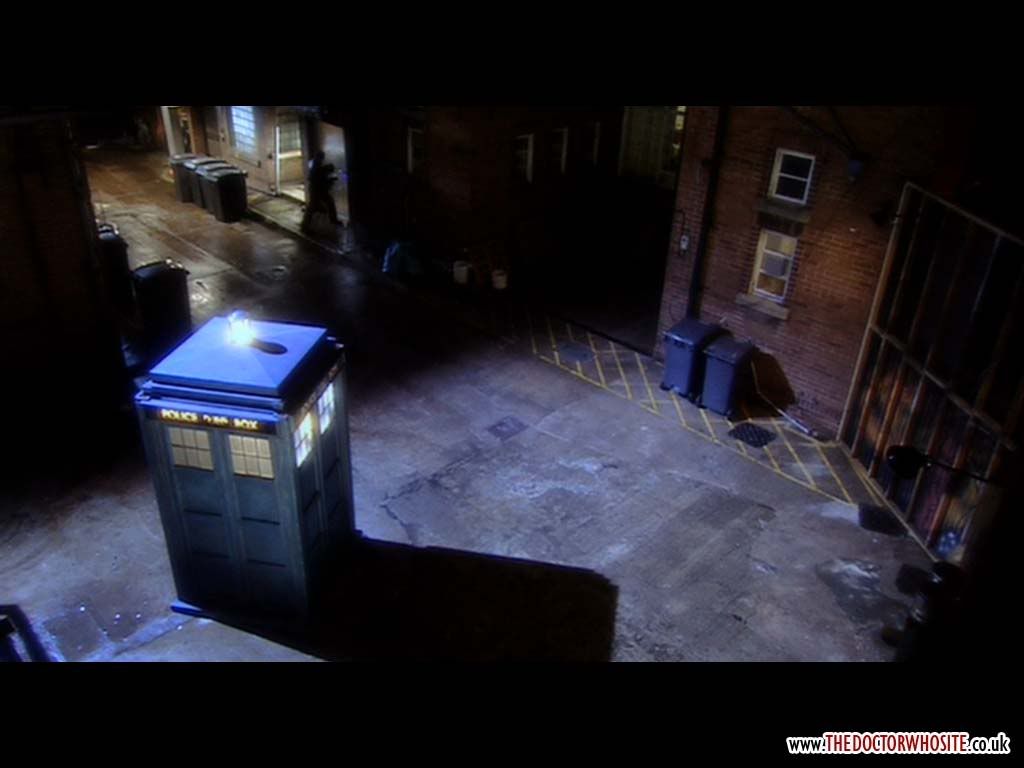
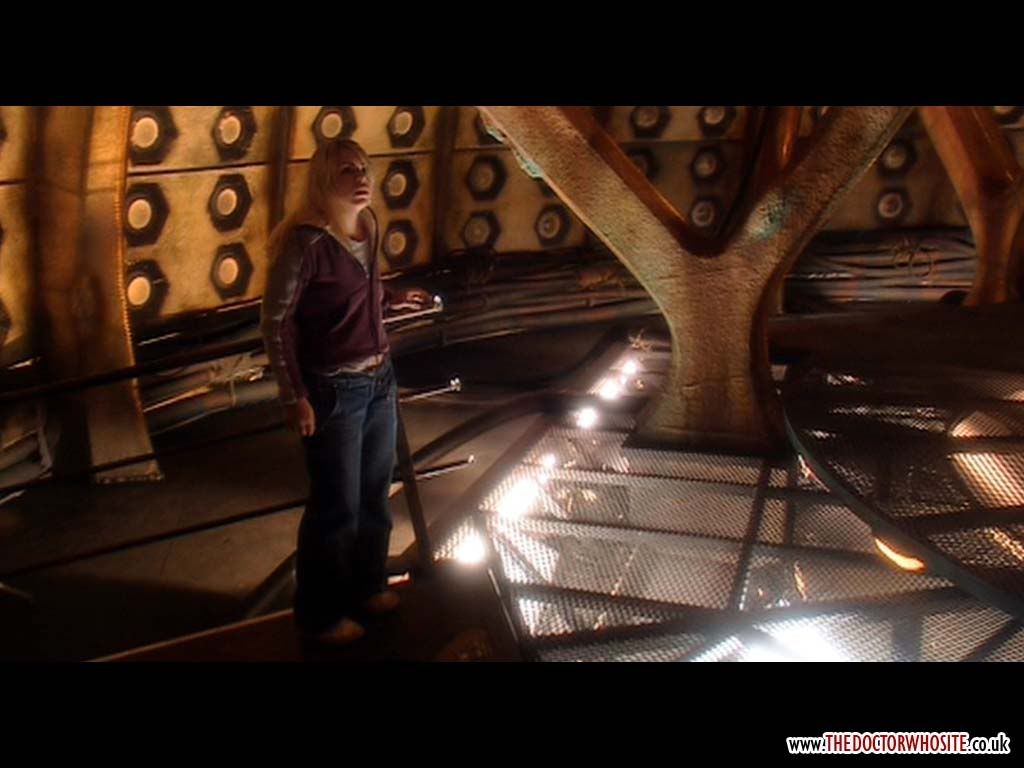
The Ninth Doctor's era saw the introduction of a redesigned sonic screwdriver which was more versatile than its earlier versions, with functions ranging from its usual door opening abilities to conducting medical scans, repairing barbed wire and acting as a remote control for the TARDIS. The TARDIS console room also underwent a radical redesign, with an amber and green motif and a more organic look to its components.
The Ninth Doctor was also in the habit of using "slightly" psychic paper — that appeared to be a blank piece of card that had the ability to show the viewer anything that the user wanted them to see. The Doctor used this to fake various means of identification. Jack Harkness also used psychic paper in his capacity as a con man.
The Ninth Doctor modified Rose's mobile phone — which she dubbed the "superphone" — to give it the ability not just to receive and transmit where ordinary signals would not get through, but powerful enough to be able to make telephone calls to any point in time (even calibrating to the time period of the user).